
What happens in a first aid course assessment?
You may be asked to show skills, take part in the whole course and complete a knowledge check. For example, the Canadian Red Cross Intermediate/Standard First Aid & CPR course requires you to show the skills and key steps, attend and take part in the whole course, and score at least 75% on a written knowledge evaluation. Other courses can have different rules. Ask about the course you are booking. Canadian Red Cross completion guidance.
See the Red Cross course completion criteria.
Is it only a written test?
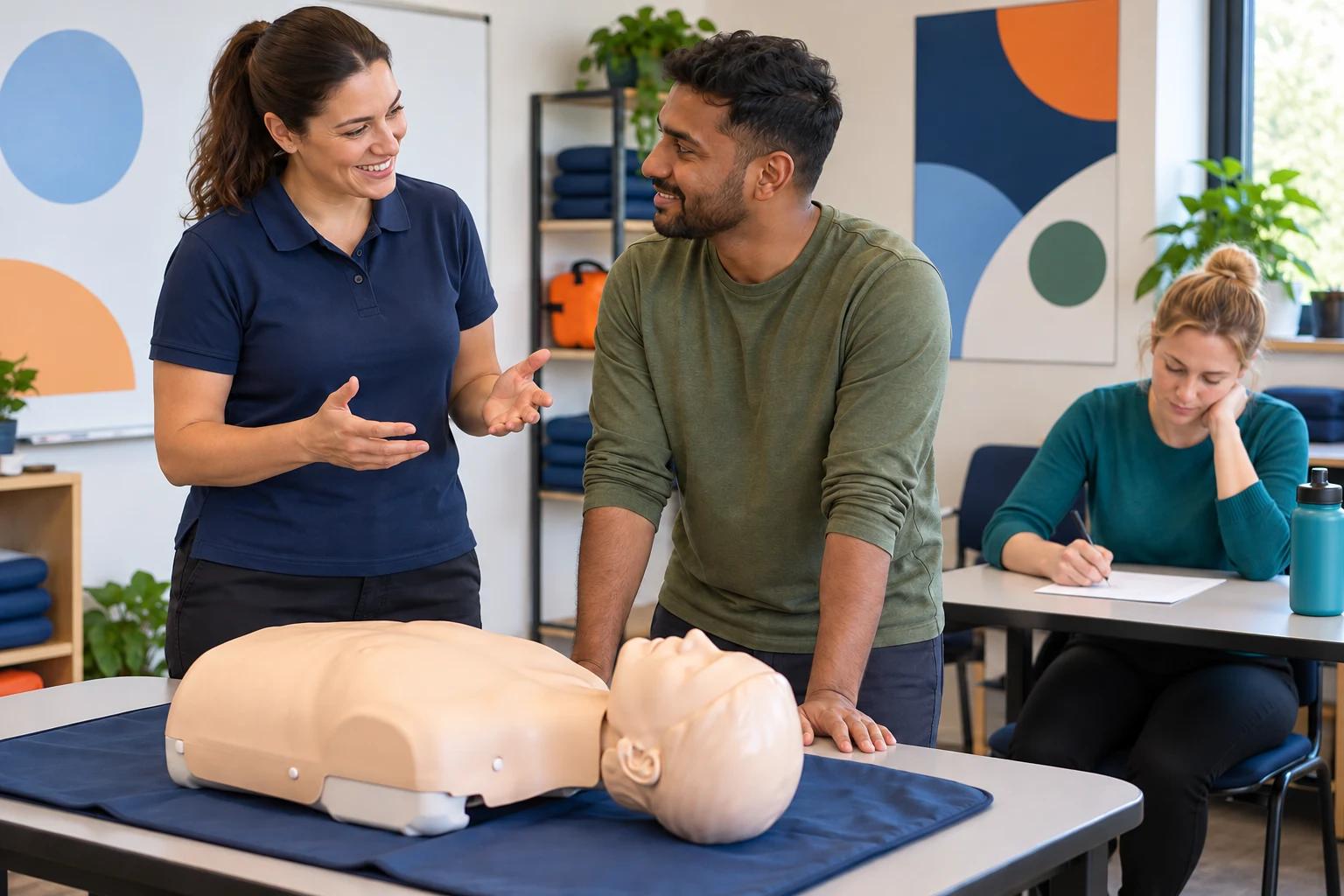
No. First aid is about decisions and actions as well as words. In the in-class guidance, the instructor checks whether you can demonstrate skills and important steps taught during the class. A separate written check asks about what you learned. The aim is to show that you can use the course material, to learn how to respond.
| Part of the course | What you may do | What to confirm |
|---|---|---|
| Learning and participation | Join the activities across the full curriculum | Attendance and participation rules for this exact course. |
| Skills practice | Demonstrate taught steps with feedback | Which skills are required and how the instructor assesses them. |
| Knowledge check | Answer multiple-choice questions | Applicable pass mark and review or retest process. |
The Red Cross help page describes 100% attendance and participation for the in-class curriculum. Plan your travel so you can be there for the whole session. If you think you might be late or need to leave early, speak with the provider before the day. Do not assume a video afterward makes up a missed hands-on activity.
What if I make a mistake during practice?
A class is a place to learn. Ask the instructor to explain the step again, then practise with feedback. That is different from a guarantee that everyone passes. The Red Cross guidance says an instructor reviews incorrect written answers and offers an in-class retest when a learner does not reach the stated knowledge mark. Whether you meet every other criterion still matters. Confirm your specific program's current rules rather than counting on an unlimited retake.
You can prepare without trying to find the exam online. Read the pre-course information your provider sends, finish any assigned online component when required and arrive ready to practise. Wear clothes in which you can move comfortably. If a course uses a practice manikin, you may work near others while the instructor explains and observes.
Can I ask about access needs?
Yes. Contact the provider before booking or before class if you need an accessible learning setup, a language option or clarification about a physical activity. Explain what would help you participate; you do not have to put medical details into a public form or comment. The provider can discuss what arrangements are available while respecting the course's actual certification criteria. This article cannot promise an exemption or a specific accommodation.
Courses vary. Basic/Emergency First Aid and Intermediate/Standard First Aid are current Canadian Red Cross display names under the 2026 update; your course may also include a CPR level. A CPR-only session, a childcare course and a workplace first aid course may not have identical assessments. Ask for the name of the course you are taking and its current completion rules. Old course labels may still appear in historical certificates or legislation.
What happens after class?
The provider should explain how course completion and certificate issuance work for that program. Finishing the online part or attending the room alone does not guarantee a certificate. If something is incomplete, ask the instructor what remains and what options are actually allowed. Keep the employer's or school's required course level in mind before you book.
Want to know what to expect in a specific ActionBafoly course? Contact us with the course name, preferred language and any access question. We can confirm the current format and requirements; we cannot promise a pass. In an emergency, call 911 or your local emergency number.
For group-course logistics, see how to prepare a workplace training day.