
Heart attack vs cardiac arrest: what is the difference?
A heart attack is a problem with blood reaching part of the heart muscle. Cardiac arrest is a sudden loss of effective pumping, so blood stops reaching the brain and other organs. A heart attack can lead to cardiac arrest, but the two terms do not mean the same thing. Both need urgent help. If you suspect either emergency, call 911. Heart & Stroke comparison.
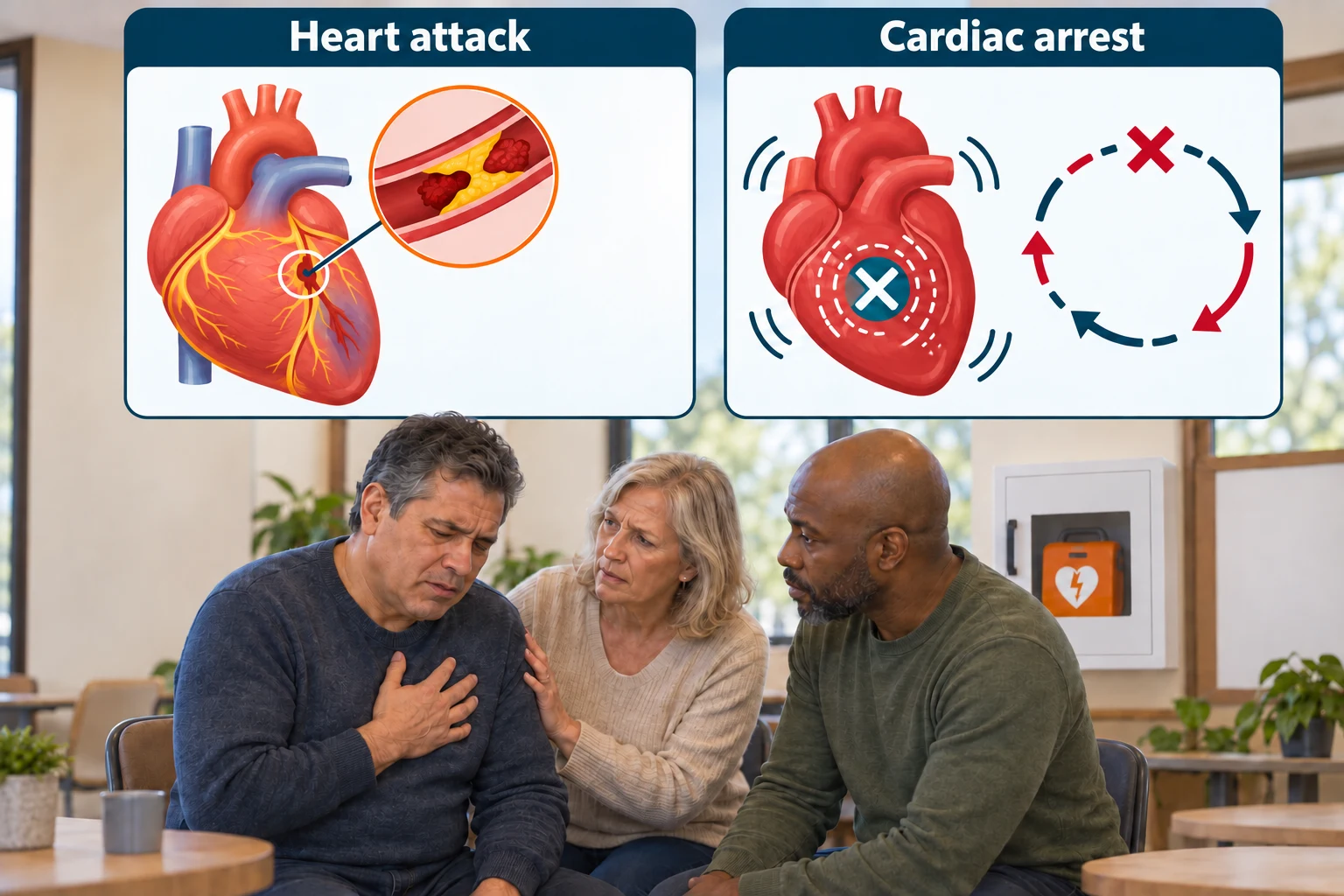
What happens in a heart attack?
Blood flow to part of the heart muscle gets blocked. The person may still be awake and breathing. Possible signs include chest discomfort, sweating or pain spreading to an arm, shoulder or jaw. Signs can differ from person to person. You cannot confirm a diagnosis from a blog post or rule out an emergency because one familiar sign is missing.
If a responsive person may be having a heart attack, call 911 promptly and follow the emergency operator's advice. Stay with the person and observe whether they remain responsive and breathe normally. Do not start CPR just because someone is conscious and has chest pain. CPR is for a person in cardiac arrest; the situation can change, so watch and follow your training and the operator.
What happens in cardiac arrest?
The heart is no longer pumping blood effectively. If the person is unresponsive and is not breathing normally, treat this as suspected cardiac arrest. Heart & Stroke directs bystanders to call 911, ask someone to get an AED, begin CPR and use the AED as soon as it is available. An AED is an automated external defibrillator; it checks the rhythm and advises a shock only when appropriate. No shock advised is not a reason to leave the person without help. Heart & Stroke: CPR and AED response.
| Question | Possible heart attack | Suspected cardiac arrest |
|---|---|---|
| What is affected? | Blood supply to part of the heart muscle. | Effective pumping and blood flow to vital organs. |
| May the person respond? | Yes; the person may be awake with symptoms. | Unresponsive and not breathing normally. |
| What should a bystander do? | Call 911; follow the operator and watch the person. | Call 911; start CPR and use an AED as directed. |
| Is CPR automatic? | No, not for a responsive person simply because of chest pain. | CPR is an urgent response when the person is unresponsive and not breathing normally. |
This table is a guide to recognizing a possible emergency, not a way to diagnose one. An arrest can have more than one cause, including a heart attack. A person with a heart attack might later become unresponsive and stop breathing normally. That change calls for the cardiac-arrest response. Do not wait to settle the name of the illness before calling for help.
What if I am unsure what I am seeing?
Call 911 and explain what you can observe: whether the person responds and whether they breathe normally. The dispatcher can guide you. Do not make a decision from a single symptom or delay the call while reading more articles. Training helps you practise checking, calling and caring within your level of skill; it does not turn you into a clinician.
It can be easy to remember the words this way: a heart attack interrupts the heart muscle's supply; cardiac arrest interrupts effective circulation to the body. But a short comparison cannot cover every possible symptom or cause. For a real person, your next action depends on what is happening now and the instructions you receive from emergency services.
Want to be more prepared before an emergency? ActionBafoly offers first aid and CPR education; ask about a suitable hands-on course and confirm its format and language before booking. Contact ActionBafoly. This page is education, not medical advice or a substitute for 911.
For the next training step, read what parents should know before taking a CPR course.