
First Aid Kit Checklist for Soccer Tournaments in Eastern Ontario
Bring a stocked first aid kit to each playing area. But a bag alone is not a plan. Before the first game, make sure someone knows who carries it, where the nearest AED is, and how to direct 911 to the right field.[2][3]
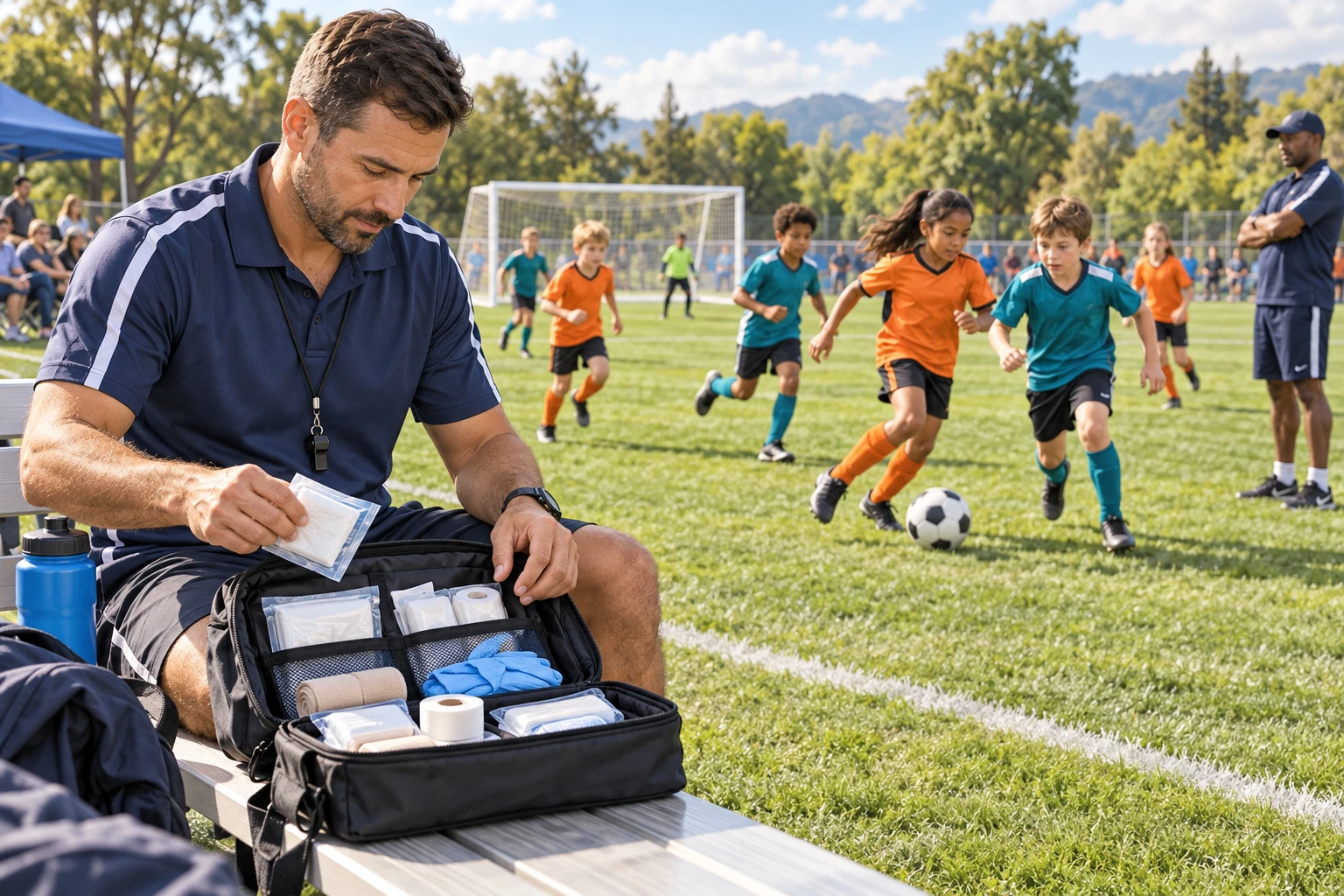
What goes in the kit?
Start with the Canadian Red Cross first aid kit list. Its youth sports guide also names supplies useful at games.[1][2] Pack for your event and your team's training level. This is a planning list, not a required Ontario kit standard.
| Pack | Check before play | Why it is there |
|---|---|---|
| Assorted adhesive bandages, sterile gauze, roller bandages and medical tape | Packs are sealed and supplies are dry | Dressings for common cuts and scrapes |
| Triangular bandages | Clean and easy to find | Support supplies for a trained helper |
| Non-latex disposable gloves and hand-cleaning supplies | Several fresh pairs are ready | A barrier for the person helping |
| Instant cold packs | Unused packs are intact | A portable cold source |
| Scissors, tweezers, pencil and notepad | Tools work; notes stay with the kit | Small tools and a way to note what happened |
| CPR barrier device, such as a pocket mask | Device is intact and helpers know where it is | Equipment for people trained to use it |
| Emergency blanket and flashlight | Light works; spare batteries are separate | Useful if play or a response runs late |
These items appear on the Red Cross kit list. The full source also includes antiseptic wipes, a thermometer, eye patches and safety pins — check it before you shop.[1] Keep the kit dry and easy to reach. Replace anything damaged or outdated and restock after every use.[1] Scale supplies to your fields, teams and event plan. A shop's prepacked sports kit is not proof that your tournament is ready.
What stays beside the kit?
Write the site address and field number on an event card. Mark the gate where help can enter. Give one person the job of calling 911 and another the job of meeting the responders. Keep a charged phone close. Ask the host site where its AED is and whether it is accessible during every game — do not assume the kit includes one. The Red Cross youth-sports guide urges people to know the exact location and nearest AED ahead of time.[2]
Before play, check each field for holes, glass, loose goals and blocked access. Ontario's field-of-play guidelines recommend field and equipment checks, accessible first aid equipment and a severe-weather plan. The province says those guidelines are not mandatory; follow your venue and sport organization's own rules too.[3]
For a multi-field day, try a small handoff card:
Field: _ · Kit carrier: · Kit location: _ · AED location: · 911 caller: _ · Person meeting responders: _ · Site address / entrance: ____
Keep private player information under your organization's rules, not on a public sideline card.
Check it twice: before play and after use
The day before, ask each field lead to open the kit and check it against the packing list. At the field, show the next volunteer exactly where it is. After a game, log what was used and replace it before the next match. The Red Cross recommends regular checks and immediate restocking after use.[1] A kit locked in a car across the complex will not help the person standing at the pitch.
A head injury needs more than an ice pack. In Ontario, sport organizations have Rowan's Law concussion duties, including removal-from-sport and return-to-sport protocols. Follow your organization's process; a coach should not use the kit to clear an athlete to return.[4] If an emergency is happening, call 911 and follow your training.
Quick questions
One kit for the whole tournament?
There is no universal number in this checklist. Think about how far apart fields are, who carries each kit and whether supplies can be reached during play. Assign a lead to check each area before kickoff.[1][3]
Should we buy an AED for the kit?
First find out whether the venue has an AED, where it is and who can reach it. Treat that as a separate equipment and access decision; a pocket mask is not an AED.[2][3]
Do volunteers need training?
A kit does not teach someone what to do. Consider first aid and CPR practice for coaches and event helpers; confirm any course requirements with your sport organization.[2] For more on what coaches should know, see our first aid basics for youth sports coaches guide.
ActionBafoly is based in Montreal. Ask about group first aid and CPR training for a sports team or event crew in a selected Eastern Ontario community. Share your location, group size and preferred date; availability and arrangements are confirmed after your request.[5]