
CPR vs AED: why might someone need both?
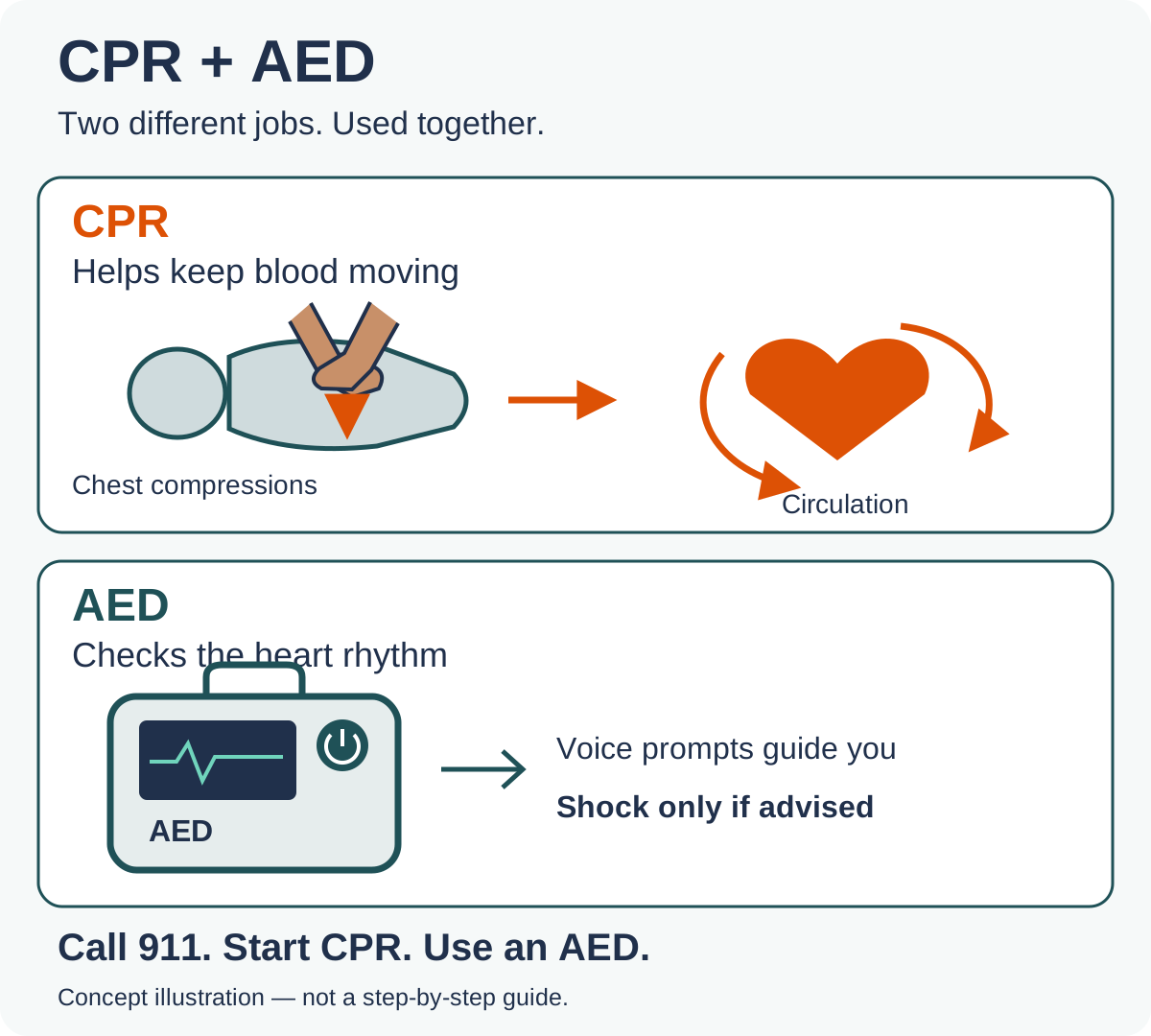
CPR helps move blood when a person's heart is no longer pumping effectively. An automated external defibrillator (AED) checks the heart's rhythm and may deliver a shock when the device advises one. They do different jobs in a suspected cardiac arrest. If a person suddenly collapses, is unresponsive and is not breathing normally, call 911, ask for an AED and start CPR. Use the AED as soon as it arrives, following its voice and visual prompts. Heart & Stroke: AEDs.
What does CPR do?
Cardiopulmonary resuscitation, or CPR, involves chest compressions and, depending on training, rescue breaths. Heart & Stroke explains that it helps circulate blood and oxygen to the brain and other vital organs while emergency help is on the way. CPR does not by itself restart the heart. It buys precious time; it is not a substitute for emergency services.
If more than one person is present, one can call for help and bring the AED while another begins CPR. Follow the emergency operator's guidance and your training. Do not delay the call while searching for a device somewhere else in the building. Knowing where the AED is before an emergency can make the response smoother, which is a different question from how the device works.
What does an AED do?
An AED is a portable device that analyses heart rhythm. It gives spoken and often visual directions. If its analysis finds a rhythm for which a shock is indicated, it will guide the rescuer. It does not shock every person or every cardiac-arrest rhythm. Follow the device's own prompts; do not invent a shock step or try to make a device shock when it does not advise one.
| Tool | Main job | What it does not mean |
|---|---|---|
| CPR | Helps circulate blood and oxygen during cardiac arrest | Does not itself restart the heart or replace 911. |
| AED | Analyses rhythm and can guide a shock when indicated | Does not shock every rhythm or replace CPR. |
| Both together | Support a fast response while EMS is coming | Do not guarantee survival or diagnose the cause. |
What if the AED says “no shock advised”?
That message is about the rhythm the AED detected at that moment. It does not mean the person is fine or that you should stop helping. Heart & Stroke instructs rescuers to continue CPR if no shock is advised, while emergency services are on the way. Keep following the device and emergency operator's instructions. The AED may reassess; the rescuer should not treat a single message as a diagnosis.
People sometimes imagine an AED as a machine that always “starts a stopped heart.” That is too simple. Some rhythms can be shocked and others cannot. CPR still matters while an AED is being brought over, attached and used. Even when the device advises a shock, the emergency is not over. Professional responders are still needed.
Do I need to be a clinician to use it?
Heart & Stroke says anyone can use an AED and its prompts guide the user. Hands-on training helps you practise finding the device, working with others and responding to its directions under less stress. Reading this page is not a practical class or a certification. For pad placement, follow the pictures on the AED pads and the device's instructions.
Learn the distinction, then practise it. Ask your workplace or community site where its AED is and whether the team has a response plan. ActionBafoly can discuss available CPR/AED training in English or French; course details and certification must be confirmed before booking. Contact ActionBafoly. In an emergency, call 911 or your local emergency number.
Parents choosing practical training can also read what to know before a CPR course.