Before babysitting: who has checked this setting for hazards?
A young babysitter may know the family's routine and still arrive at a home they have never cared for a child in. What should the family and sitter talk about before care begins? The Canadian Red Cross lists recognizing and preventing unsafe situations, making safe choices and promoting safe behaviours in its public Babysitting course outline. That is a broad course topic—not a verified stand-alone lesson, a house-inspection credential or a promise that training makes any home safe. [1]
What does the course cover—and what don't we know?
The Red Cross says its Babysitting course also covers caregiving, children's developmental stages, first aid skills and decisions. Its public outline gives the safety topic above, but does not publish a step-by-step instructor plan for this topic. We cannot claim a specific lesson sequence or a complete inventory of its teaching activities from that heading alone. [1]
The value of practising the question is practical: a sitter can learn to notice when they need information from the responsible adult rather than assume that every family's space and expectations are alike. This article is a conversation starter, not a hazard checklist or a substitute for hands-on training.
Why does the particular home or outing matter?
A room, an outdoor space and a child's abilities are not fixed. The Public Health Agency of Canada's parent-facing safety guidance says adults should think ahead about possible dangers at home and outside, and pay attention as children learn new skills. That guidance was last dated March 5, 2018. It is context for adults, not a Red Cross youth lesson or permission to hand adult safety responsibilities to a young sitter. [2]
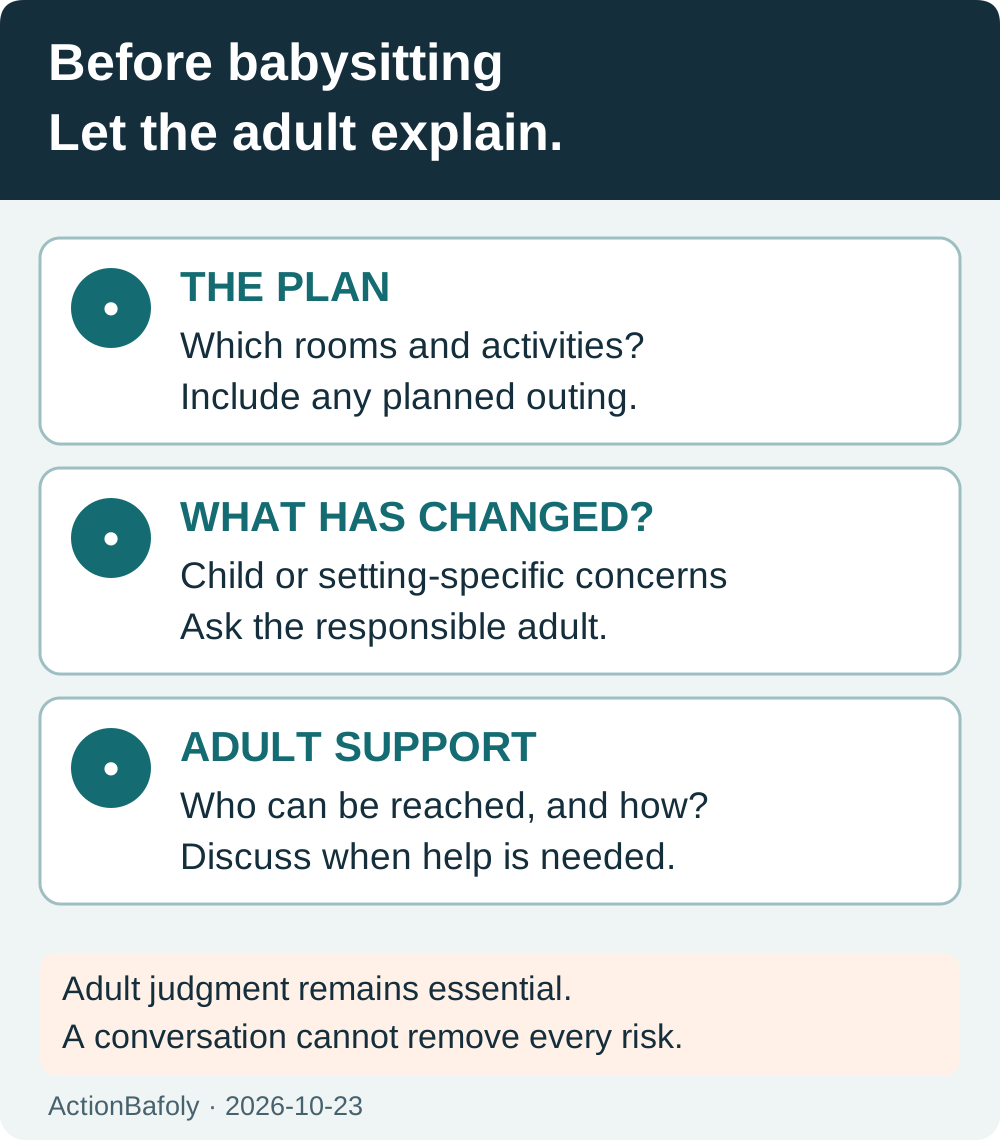
Before a visit, the responsible adult can lead a short handover. These are editorial conversation prompts, not Red Cross lesson activities or a complete hazard checklist:
| Ask the responsible adult | Why ask before care begins? |
|---|---|
| Which rooms and activities are in the plan—including any outing? | The sitter should not have to guess which spaces or activities the family has agreed to. |
| Has anything changed for this child, or is there a concern about this particular setting that you want to discuss? | A child's abilities and surroundings can change; the adult should explain what matters here rather than assume a generic list fits. |
| Which adult is reachable, how can I reach them, and when should I seek their help? | A young sitter needs clear limits and an adult to turn to when a situation falls outside the agreed plan. |
The adult remains responsible for deciding whether the arrangement and environment are appropriate. This discussion makes assumptions visible; it does not remove every risk. PHAC's parent-facing guidance [2] supports looking ahead and noticing change, not this specific three-question handover.
Who benefits from that conversation?
For a new sitter, asking about the setting and limits is more useful than pretending to know a child or home they have not met. For a parent, it is a chance to explain the plan and who will be reachable. For a youth group, it gives adults a concrete reason to discuss preparation together. These are potential benefits of a clearer handover, not measured injury-prevention outcomes or a certification of competence.
A workplace or childcare employer should not treat a youth Babysitter Completion Certificate as CPR-C, professional childcare first aid or proof that its own requirements have been met. The Red Cross names a Babysitter Completion Certificate for its course, states a minimum age of 11 or completion of Grade 5, and notes that provincial regulations should be checked. Local rules and the role's actual duties need separate verification. [1]
How can a family take the next step in Montreal?
An adult parent, guardian or group organizer can request ActionBafoly Babysitter training. Its Montreal page describes a course by request for learners aged 11 or older, or who have completed Grade 5. Sending the form is not a reservation or payment: ActionBafoly replies with availability, arrangements and a quote. The course page says the completion certificate will be confirmed in that reply. [3]
Ask about training if a young person is preparing to care for children—but also make time for the family-specific discussion. Neither a course nor this article replaces adult judgment, appropriate supervision or the requirements that apply to a particular role.
For other training information, visit the ActionBafoly website or YouTube channel.
Sources
- Canadian Red Cross, Babysitting Training, undated public course outline, accessed October 23, 2026.
- Public Health Agency of Canada, Safety: Why Do Children Need Adults To Keep Them Safe?, page dated March 5, 2018, accessed October 23, 2026.
- ActionBafoly, Babysitter in Montreal, live inquiry page accessed October 23, 2026.