Babysitting course: what does it teach and who is it for?
A young person may be eager to babysit. But what should they practise before a family asks them to take care of a child? The Canadian Red Cross Babysitting course is built around that responsibility: caring for children of different ages, making safer decisions and learning basic first aid. It is a youth course, not a professional childcare first-aid qualification. [1]
What is the Babysitting course?
The course gives young people a guided place to discuss what it means to be responsible for a child. The Red Cross describes leadership, decisions, difficult behaviours and the business of babysitting alongside caregiving and safety. It is not just a lesson on what to do in an emergency. [1]
ActionBafoly offers the course in person by request in the Montreal area. A parent, guardian or adult group organizer can ask about a class; the request is not a confirmed booking. [2]
What does it cover?
The Red Cross public course outline names child development, feeding, diapering, dressing and play, recognizing unsafe situations, making safer choices, first aid skills and communicating one's babysitting services to families. These are broad topic headings, not a complete lesson-by-lesson syllabus or a promise that a particular medical technique will be taught. [1]
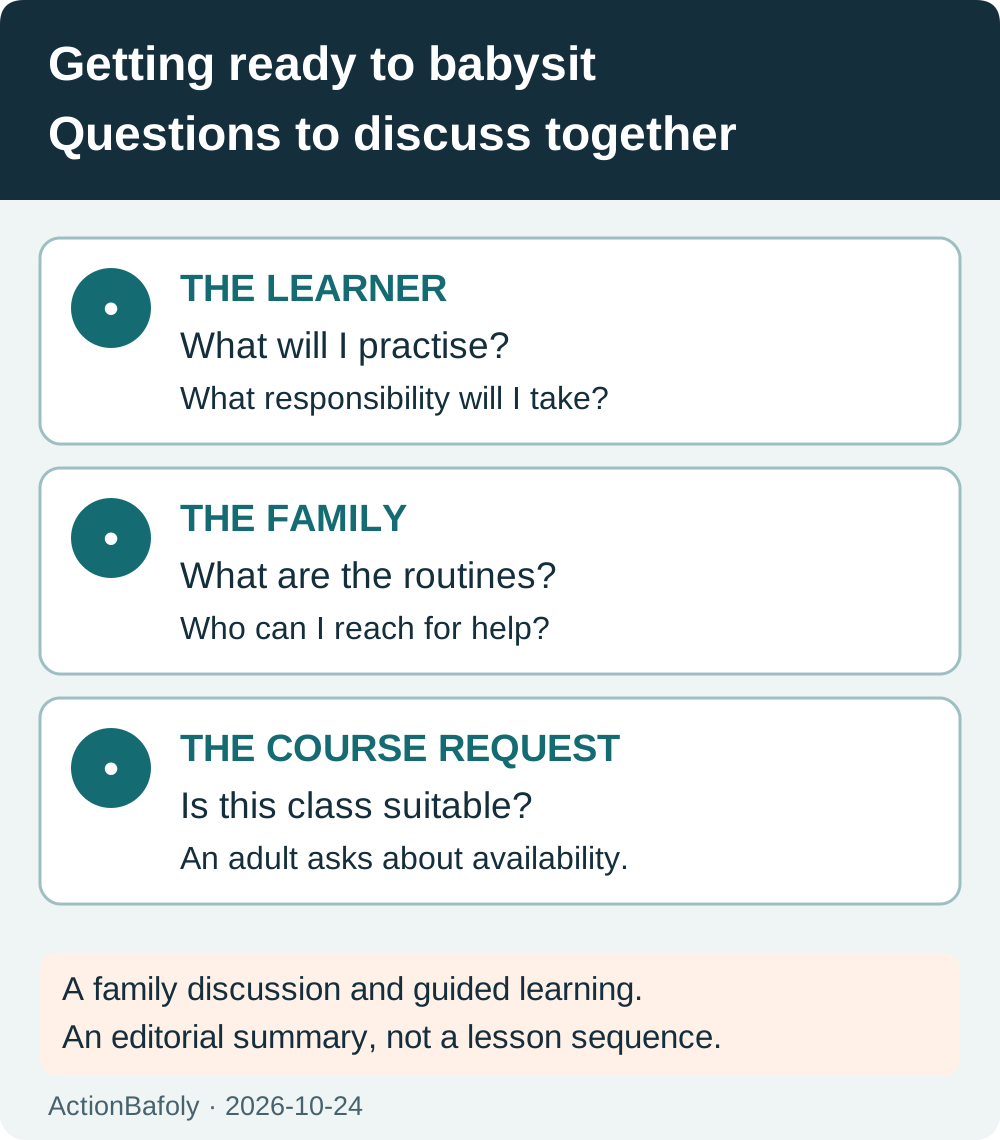
That mix matters because everyday care and judgment go together. A young caregiver may need to understand a family's expectations, notice when a situation is beyond their experience and know whom to ask for help. Before any babysitting arrangement, a family can discuss routines, contact details and when the young person should call the adult back. This is a practical family conversation, not a claim about a named Red Cross lesson or a substitute for course practice.
Who is it for?
The Red Cross describes the course for young people and sets the entry requirement at age 11 or older, or completion of Grade 5, with a reminder to check provincial regulations. Meeting that entry condition is not the same as meeting every family's, employer's or jurisdiction's requirements for childcare. Ask about suitability if the learner's circumstances are uncertain. [1]
For an individual learner, the course offers guided practice and a chance to think through responsibilities before accepting a babysitting arrangement. For a family, it can open a clearer conversation about expectations and boundaries. A school or community group can ask ActionBafoly about a group class. These are possible benefits, not measured outcomes or guarantees that training alone makes babysitting safe. [1][2]
Why choose a course rather than just a checklist?
A checklist can remind a family to share contacts and routines. It cannot show how a learner participates, practises caregiving or responds to feedback. Red Cross program standards for the classroom course call for attendance and participation throughout, and demonstration of critical personal-care and first-aid skills and expected behaviours. The exact instructor lesson plans are not available in this research packet, so this article does not present a complete lesson inventory. [3]
The course takes 7–8 hours. The Red Cross lists a Babysitter Completion Certificate; ActionBafoly says it will confirm the completion arrangement in its reply. Do not treat that certificate as CPR-C certification or as automatic acceptance for a paid childcare role. If a role requires a particular first-aid credential, check its exact requirement first. [1][2]
| Question to check before requesting | Why it matters |
|---|---|
| Is the learner at least 11, or have they completed Grade 5? | This is the published course entry rule; provincial rules may also matter. |
| Is an in-person, by-request class suitable? | ActionBafoly will reply with availability and delivery details; no date is guaranteed by the form. |
| What certificate does the learner need? | A Babysitter Completion Certificate has a different purpose from a workplace first-aid credential. |
| What should the family discuss before babysitting? | Contacts, routines and expectations should be agreed directly with the responsible adults. |
How can a family or group request it?
An adult can request the Babysitting course from ActionBafoly. Give the number and age range of learners, preferred timing and location. Use the adult's own contact information; do not send children's full names or private medical details in the initial request. There is no payment at submission, and submitting the form does not reserve a place. ActionBafoly will reply with availability and a quote. [2]
You can also explore the ActionBafoly website and ActionBafoly's YouTube channel for other training information. This article is not a substitute for hands-on training or for checking local credential requirements.
Sources
- Canadian Red Cross, Babysitting Training, undated public course page, accessed 2026-10-22. Public course outline, age/grade prerequisite, duration and certificate.
- ActionBafoly, Babysitter request page, undated, accessed 2026-10-22. Local offer and request conditions.
- Canadian Red Cross, First Aid Program Standards 2026, pp. 43–44, restricted authorized source on file; participation and completion criteria. Not a public link and not reproduced here.